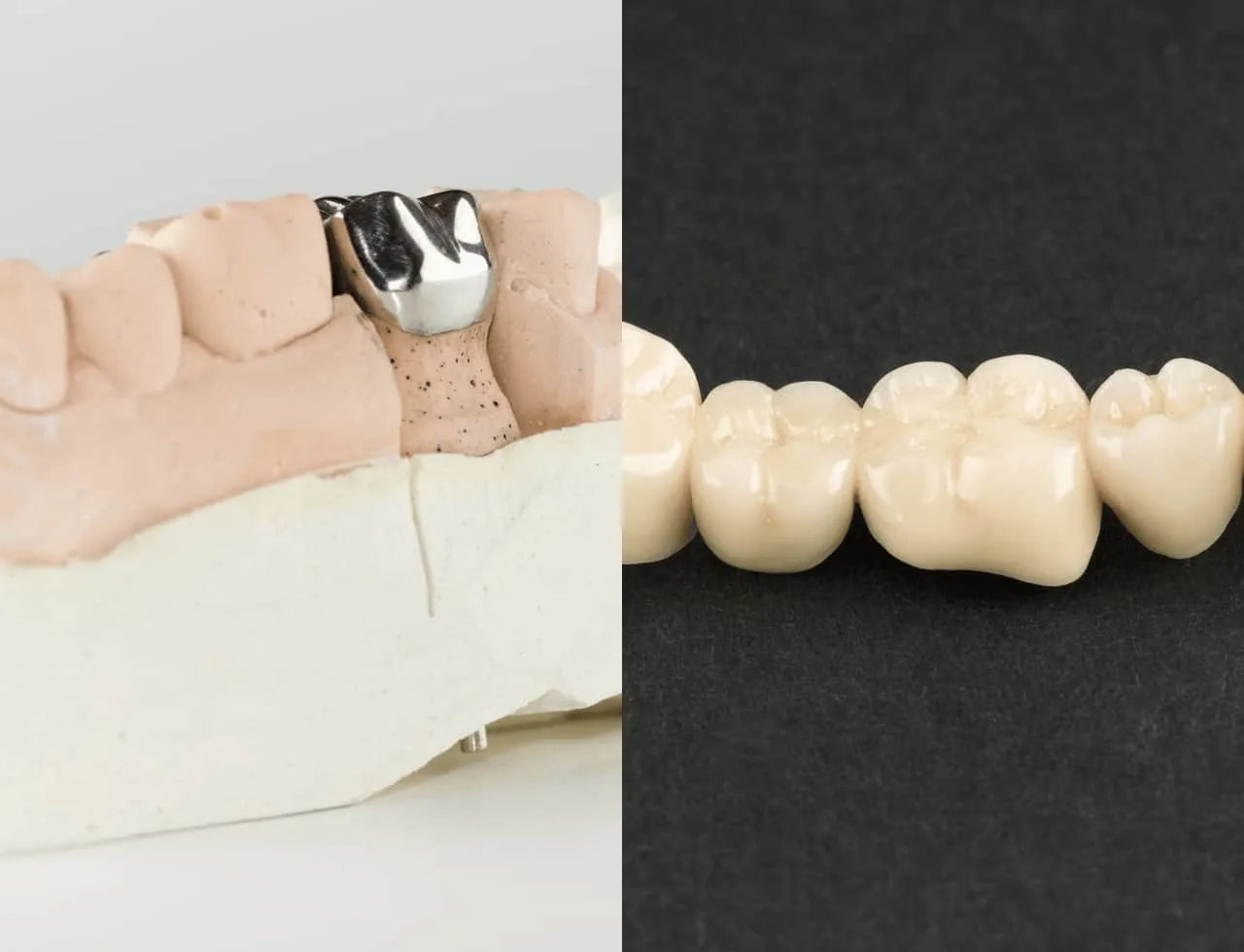
Implant Crowns & Bridges

Smilebook Dental Hyderabad — Implant crowns & bridges. In-house CAD/CAM lab. Free consultation.
✍️ Dr. Anurag Ellanki, B.D.S, M.D.S · 📅 Updated June 2026 · ⏱ 7 min read
Everything you need to know about implant crowns and implant-supported bridges in Hyderabad — materials, screw-retained vs cement-retained attachment, how Smilebook’s in-house lab fabricates them, and how to maintain them long-term.
What materials are used for implant crowns in Hyderabad?
Smilebook Dental uses full-contour zirconia (posterior teeth — maximum strength at 1,200+ MPa), layered zirconia (anterior teeth — high translucency and lifelike aesthetics), and IPS e.max lithium disilicate (anterior crowns requiring maximum aesthetic precision). All implant crowns are designed and milled in Smilebook’s in-house CAD/CAM lab with a standard turnaround of 2–5 working days. Contact: +91 95159 61060.
What Is an Implant Crown — and How Does It Attach?
What is an implant crown and how is it attached to the implant?
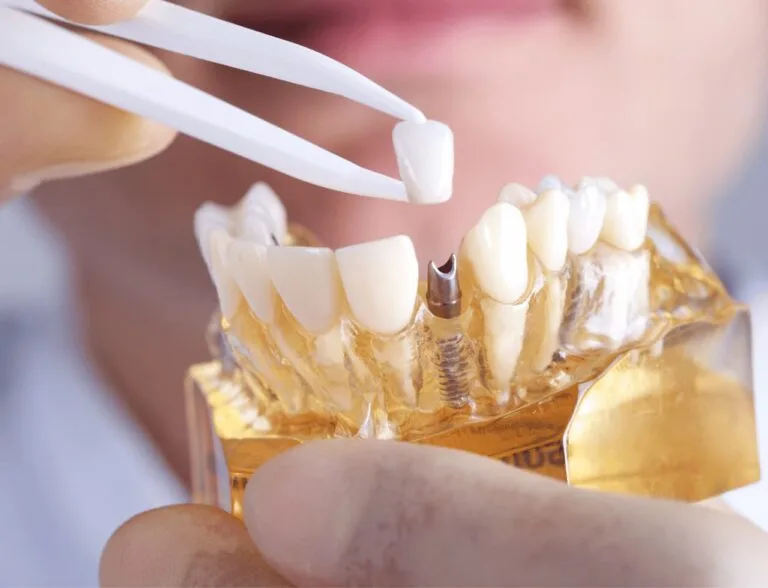
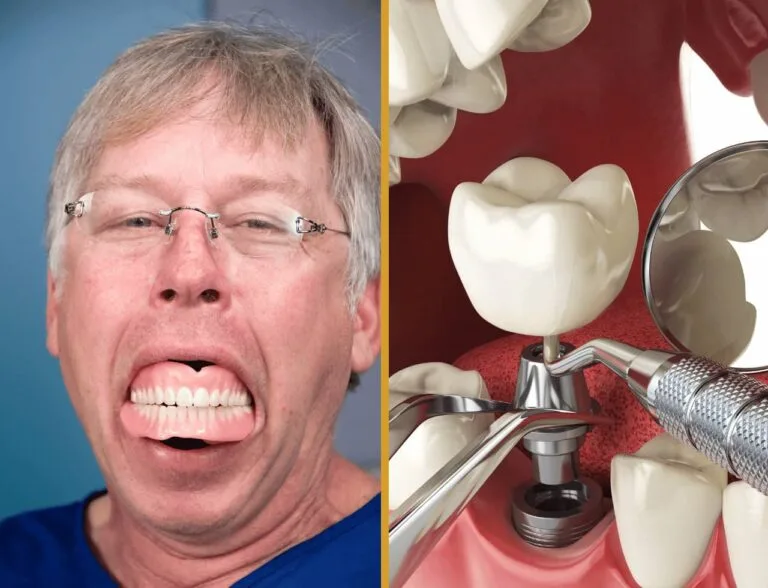
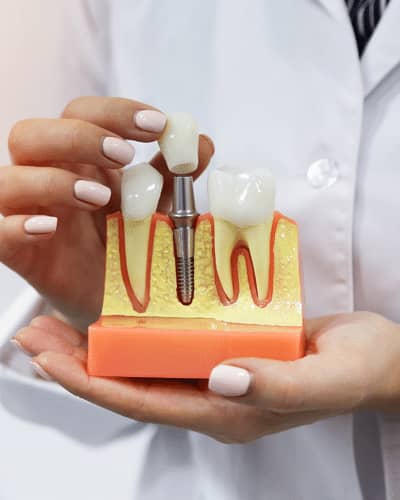
An implant crown is the visible tooth-coloured restoration placed on top of a dental implant. It attaches to the implant via an abutment — a connecting component that sits between the implant fixture (in the bone) and the crown (above the gum). The crown is attached to the abutment either by a small retaining screw (screw-retained) or by dental cement (cement-retained). Each method has clinical advantages depending on implant position and aesthetic requirements.
An implant crown is the final stage of dental implant treatment — the part that looks and functions like a natural tooth. Because it is the most visible component of the implant restoration, the material, shade matching, and fit of the crown directly determine both the aesthetic and functional outcome. Consequently, the quality of the laboratory fabricating the crown matters as much as the quality of the implant surgery itself.
At Smilebook Dental, all implant crowns are fabricated in-house in the Smilebook CAD/CAM lab — rather than outsourced to an external laboratory. This gives Dr. Anurag direct clinical oversight over every crown’s fit, shade, and occlusion before it is placed.
Screw-Retained vs Cement-Retained — What’s the Difference?
What is the difference between screw-retained and cement-retained implant crowns?
A screw-retained implant crown is attached to the abutment with a small retaining screw accessed through a tiny hole in the biting surface — making it fully retrievable without damage to the crown. A cement-retained crown is bonded to a separate prefabricated abutment with dental cement — producing a more tooth-like appearance with no visible screw access hole. Both methods are clinically proven. Dr. Anurag at Smilebook Dental selects the most appropriate method based on implant position, aesthetic zone requirements, and long-term maintenance access.
← Swipe to see full table
| Feature | Screw-Retained | Cement-Retained |
|---|---|---|
| Retrievability | Fully retrievable — unscrew and remove | Fixed — removal risks crown damage |
| Aesthetics | Small access hole filled with composite | No visible access hole — most natural appearance |
| Excess Cement Risk | None — no cement used | Excess cement must be removed completely to prevent peri-implantitis |
| Best Position | Posterior teeth, angulated implants | Anterior teeth in aesthetic zone |
| Long-term Maintenance | Easier — fully retrievable for repair | Crown replacement more disruptive |
Crown Materials — Zirconia, e.max, and PFM
The material selected for an implant crown depends on three factors: the location of the tooth in the mouth, the bite forces it will need to withstand, and the aesthetic requirements. Dr. Anurag recommends the most appropriate material at your consultation based on these factors.
Full-Contour Zirconia
Best for posterior teeth (premolars and molars). Strength of 1,200+ MPa — withstands heavy bite forces without a separate veneer layer that can chip. Natural white appearance. Most commonly recommended material for implant crowns.
Layered Zirconia
Best for anterior (front) teeth where translucency and lifelike aesthetics are the priority. A zirconia core with a porcelain layer on top for maximum natural appearance. Slightly lower strength than full-contour zirconia but entirely adequate for anterior positions.
IPS e.max (Lithium Disilicate)
The gold standard for anterior aesthetic crowns. Exceptional translucency and colour depth — indistinguishable from natural teeth in the right hands. Fabricated by CAD/CAM milling or pressing. Strength of 400+ MPa — not suitable for high bite-force posterior positions.
PFM (Porcelain-Fused-to-Metal)
Available where patient preference or budget specifies. A metal substructure with a porcelain overlay. Long clinical track record but the metal margin may become visible at the gum line over time with gum recession. Less commonly used than zirconia at Smilebook Dental.
Implant-Supported Bridges — When More Than One Tooth Is Missing
What is an implant-supported bridge in Hyderabad?
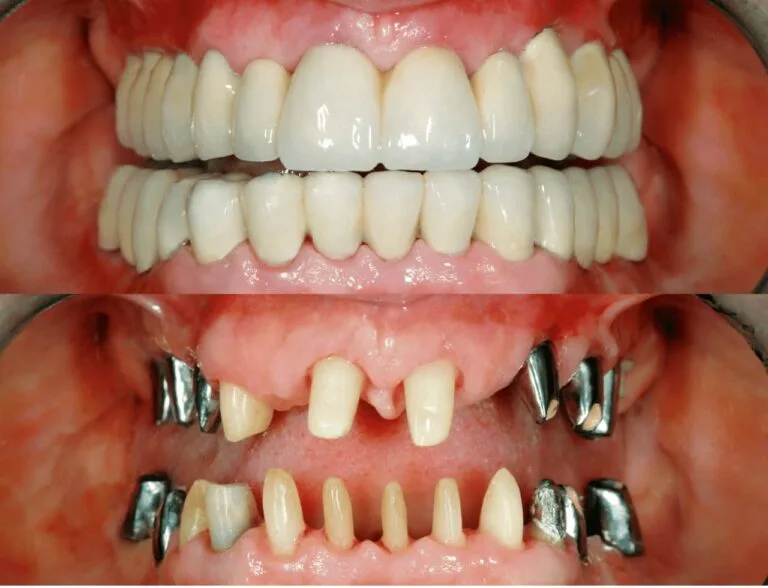
An implant-supported bridge uses two implant fixtures to support a fixed restoration of three or more adjacent teeth — without requiring healthy adjacent teeth to be ground down. At Smilebook Dental, implant bridges are fabricated in full-contour zirconia in the in-house CAD/CAM lab for a precise fit and natural appearance. They are a permanent, stable replacement for multiple adjacent missing teeth — superior to a partial denture in all functional and longevity metrics.
The key advantage of an implant-supported bridge over a conventional tooth-supported bridge is that no existing teeth are sacrificed. A conventional bridge requires the two teeth adjacent to the gap to be ground down to serve as abutments — permanently damaging healthy tooth structure and creating new potential failure points. An implant bridge, by contrast, is entirely self-supporting — leaving all remaining natural teeth completely untouched.
Furthermore, the implant fixtures stimulate the jaw bone in the gap area, preventing the progressive bone resorption that occurs beneath conventional bridges and dentures. Because of this bone preservation, an implant bridge maintains the facial anatomy long-term in a way that a tooth-supported bridge cannot.
In-House CAD/CAM Fabrication — Why It Produces Better Results
Many dental clinics in Hyderabad outsource implant crowns to external laboratories. This introduces two risks that Smilebook Dental eliminates entirely by fabricating all crowns in-house: the risk of fit errors discovered only when the crown arrives for placement, and the lack of clinical oversight over shade selection and occlusal design.
Maintaining Your Implant Crown Long-Term
An implant crown lasts 15–25 years with the right care. The implant fixture beneath it is designed to last a lifetime. The maintenance protocol is straightforward and similar to caring for a natural tooth — but a few specific considerations apply to implant restorations.
Book Your Implant Crown Consultation
In-house CAD/CAM fabrication. 2–5 day turnaround. Free consultation. Two clinics across Bachupally and Gachibowli, open 7 days.
Implant Crowns & Bridges Hyderabad — FAQs
What materials are used for implant crowns at Smilebook Dental? Full-contour zirconia for posterior teeth (maximum strength, 1,200+ MPa), layered zirconia for anterior teeth (high translucency), and IPS e.max for premium anterior aesthetics. All fabricated in Smilebook’s in-house CAD/CAM lab. 2–5 day turnaround. Call +91 95159 61060.
How long does an implant crown last in Hyderabad? Implant crowns at Smilebook Dental in zirconia or e.max typically last 15–25 years with proper care. The implant fixture beneath is designed to last a lifetime. Longevity depends on oral hygiene, bite forces, and regular 6-monthly maintenance visits at Smilebook Dental.
What is an implant-supported bridge and when is it used? An implant-supported bridge uses two implants to support a fixed restoration of 3+ adjacent missing teeth — without grinding down healthy adjacent teeth. Fabricated in full-contour zirconia in Smilebook’s in-house lab. It is a permanent, bone-preserving alternative to partial dentures or conventional tooth-supported bridges.
Smilebook Dental — Locations in Hyderabad
Opp Ramdev Jewellers, Mallampet Road · Mon–Sat 9AM–1:30PM & 3:30–9PM · Sun 10AM–7PM
Beside Radisson Hotel · Open 7 days · 11AM–8:30PM
Related Implant Pages
Full clinical guide — biology, materials, types, success rates.
Why MDS specialist qualifications matter for implant treatment.
In-house CAD/CAM lab — how implant crowns are designed and milled.
Immediate-load implants with a crown placed the same day.
Full-arch implant-supported restorations for multiple missing teeth.
6-monthly professional cleaning — essential for implant crown longevity.
Full pricing reference across every treatment at Smilebook Dental.