Dental Implants Hyderabad

Smilebook Dental Hyderabad — Implants from ₹25,000. Free consultation. Open 7 days.
✍️ Dr. Anurag Ellanki, B.D.S, M.D.S — Implant Specialist · 📅 Updated June 2026 · ⏱ 13 min read
A complete clinical and pricing guide to dental implants in Hyderabad — how they work at the biological level, what a single implant, All-on-4 or All-on-6 costs at Smilebook Dental, which patients are suitable, and what separates a successful implant from one that fails.
How do dental implants work, and what do they cost, in Hyderabad?
A dental implant is a titanium fixture placed into the jaw bone that fuses permanently with the bone through osseointegration, topped with an abutment and a custom crown made in Smilebook’s in-house CAD/CAM lab. At Smilebook Dental Hyderabad, a single tooth implant costs ₹25,000–₹55,000, All-on-4 starts from ₹2,50,000 per jaw, and 0% EMI is available. All procedures are performed personally by Dr. Anurag Ellanki (B.D.S, M.D.S). Documented 10-year success rate: 95–98%. Free consultation — call +91 95159 61060.
Implant Anatomy — The Three Components
What are the components of a dental implant?
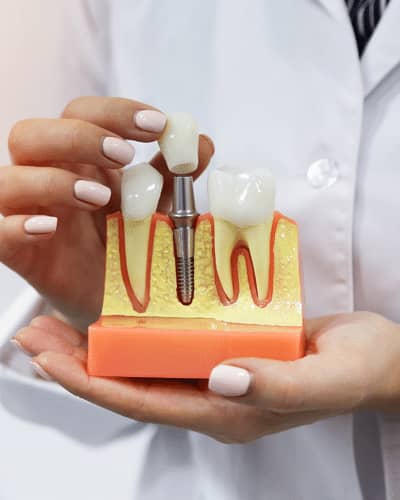
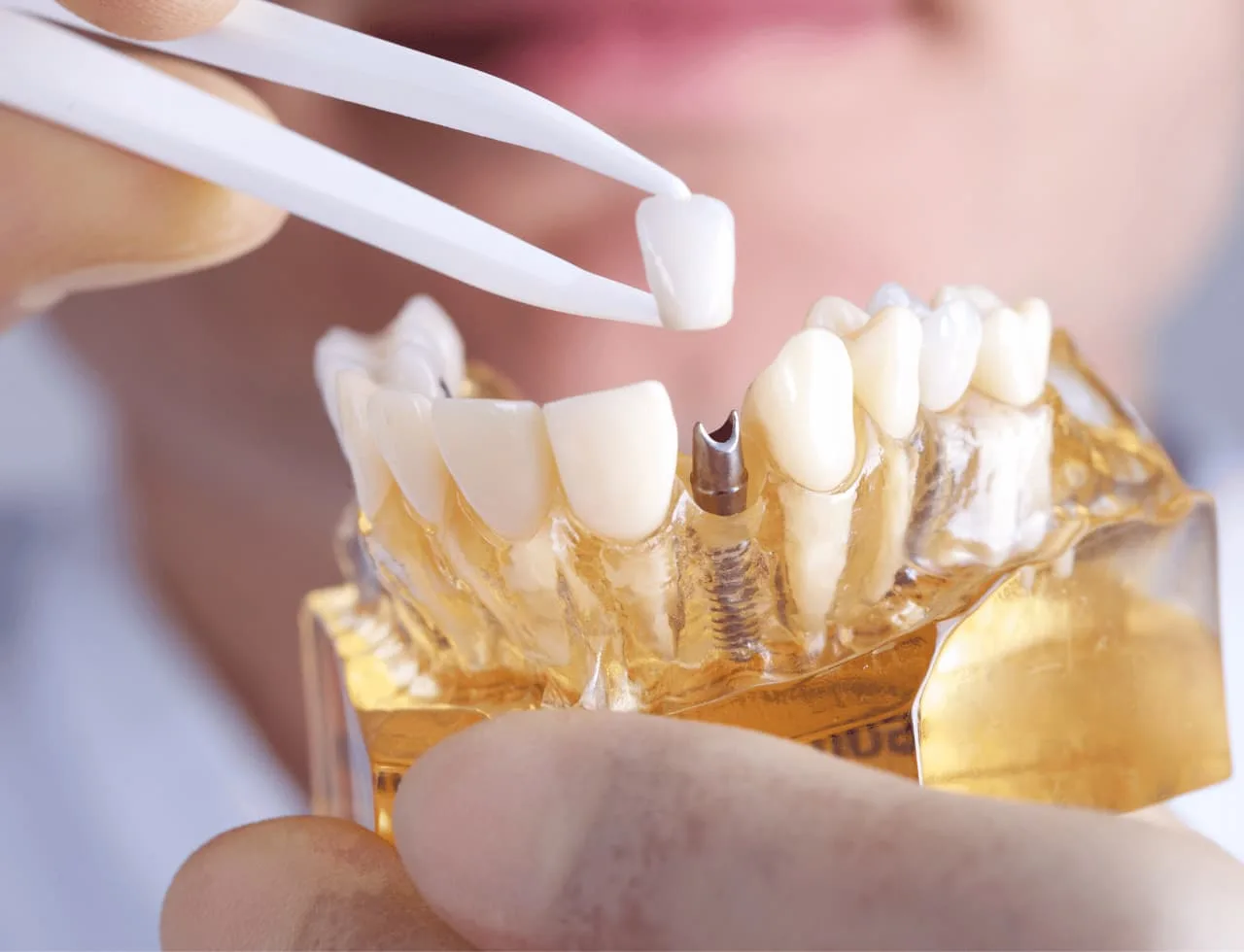
A complete dental implant restoration consists of three components: (1) the implant fixture — a threaded titanium or zirconia post placed into the jaw bone; (2) the abutment — a connecting piece that attaches to the top of the fixture; (3) the implant crown — the visible tooth-coloured restoration, custom-fabricated in zirconia or e.max to match the patient’s existing teeth.
Understanding these three components matters because each has its own lifespan. The implant fixture — once osseointegrated — can last a lifetime without replacement. The abutment is typically permanent. The crown is the component that experiences wear and typically lasts 15–25 years before replacement, depending on oral hygiene and biting forces. All three are priced together as a single package — see the Cost section below for exact figures.
Osseointegration — The Biology That Makes Implants Work
Osseointegration is the process by which a titanium implant fixture fuses permanently with the surrounding jaw bone at a cellular level. The term was first described by Professor Per-Ingvar Brånemark in the 1950s and is the biological foundation of all modern dental implant treatment.
When a titanium fixture is placed in the jaw, its microscopically rough surface promotes the attachment and proliferation of bone-forming cells called osteoblasts. Over the 3–6 month healing period, these cells lay down new bone directly against the titanium surface, creating a direct structural and functional connection between the metal and living bone — a bond mechanically stronger than the surrounding bone itself.
Implant Materials — Titanium vs Zirconia
What is the difference between titanium and zirconia dental implants?
Titanium implants are the gold standard — used in over 95% of implant cases globally, with 50+ years of clinical evidence and the highest documented osseointegration rates. Zirconia (ceramic) implants are metal-free, preferred by patients with metal sensitivities, but have a shorter evidence base and fewer size options. Dr. Anurag discusses the appropriate material for your case at your free consultation.
← Swipe to see full table
| Feature | Titanium Implants | Zirconia Implants |
|---|---|---|
| Clinical Evidence | 50+ years, 95–98% success rate | 15–20 years, growing evidence base |
| Osseointegration | Highest documented rates | Good, slightly lower than titanium |
| Metal Content | Titanium alloy (biocompatible) | Metal-free ceramic |
| Aesthetics | Silver — not visible below gum in most cases | White — ideal where gum is thin |
| Size Availability | Wide range — all positions | More limited options |
| Best For | Most cases — posterior, anterior, all-on-4 | Metal-sensitive patients, thin gum aesthetics |
Types of Implant Restorations at Smilebook Dental
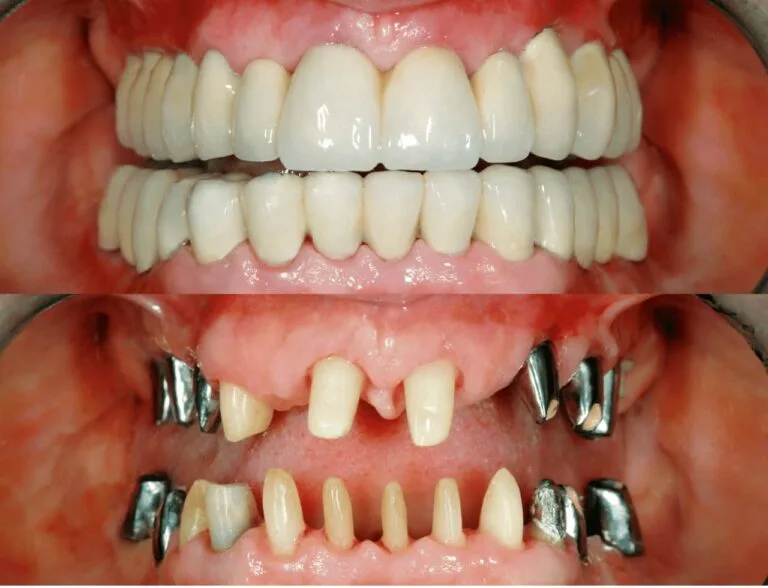
The implant fixture is the same regardless of how many teeth are being replaced. What varies is the prosthesis — the visible restoration attached to the implant or implants. Smilebook Dental offers every restoration type, with all crowns, bridges, and full-arch prostheses fabricated in the in-house CAD/CAM lab. Starting prices for each are in the cost table below.
Single Tooth Implant
One implant fixture supporting one crown. The most common procedure. Does not require adjacent teeth to be ground down, unlike a bridge.
Implant-Supported Bridge
Two implants supporting a fixed bridge for three or more adjacent missing teeth. No grinding of healthy teeth.
Same-Day Implants
A temporary crown placed the same day as implant surgery in suitable patients, confirmed by 3D CBCT scan.
All-on-4 / All-on-6
Four or six implants supporting a complete arch of fixed teeth. The permanent solution for total tooth loss.
Full Mouth Reconstruction
Comprehensive restoration combining implants, crowns, bridges and other treatments.
Implant Crowns
Custom zirconia and e.max crowns, shade-matched to adjacent teeth for an indistinguishable result.
Cost of Dental Implants in Hyderabad
How much does a dental implant cost in Hyderabad?
A single tooth dental implant at Smilebook Dental Hyderabad costs ₹25,000–₹55,000, including the implant fixture, abutment, and ceramic crown. Same-day implants start from ₹30,000. All-on-4 full arch starts from ₹2,50,000 per jaw; All-on-6 from ₹3,00,000 per jaw. Bone grafting, where required, is from ₹8,000. 0% EMI is available on all implant treatments. All costs are confirmed in writing after a CBCT scan — no hidden charges.
Complete Implant Price List — All Options at a Glance
← Swipe to see full table
| Treatment | Starting Price | Includes |
|---|---|---|
| Single Tooth Implant | ₹25,000 – ₹55,000 | Implant + abutment + ceramic crown |
| Same-Day Implant | ₹30,000 | Immediate loading — single appointment |
| Implant-Supported Bridge (3 units) | ₹55,000 | 2 implants + 3-unit bridge |
| All-on-4 (per jaw) | ₹2,50,000 | 4 implants + full arch fixed bridge |
| All-on-6 (per jaw) | ₹3,00,000 | 6 implants + full arch fixed bridge |
| Implant Overdenture (per arch) | ₹60,000 | 2–4 implants + removable overdenture |
| Bone Graft (where required) | ₹8,000 | Per site — quoted after CBCT |
| CBCT Scan | ₹1,500 | 3D bone assessment before treatment |
What’s Included in the Price
Every quoted price includes all three components of the implant system — the titanium fixture, the abutment, and the ceramic crown — plus follow-up appointments within the standard healing period. Bone grafting and the CBCT scan are quoted separately, since both depend on your individual bone volume, but are always confirmed in writing before treatment begins.
What Affects Your Final Cost
0% EMI & Payment Options
Smilebook Dental offers 0% EMI on single tooth implants, same-day implants, All-on-4, All-on-6, and full mouth reconstruction — with tenures of 3, 6, 9, and 12 months. The EMI is arranged directly at the clinic during your treatment confirmation appointment, so there’s no separate bank application. You’ll need a valid Aadhaar card, PAN card, and a credit or debit card from a participating bank. Call +91 95159 61060 to confirm eligibility before your appointment.
Who Is Suitable for Dental Implants in Hyderabad?
Am I suitable for dental implants in Hyderabad?
Most adults in good general health are suitable for dental implants. Key suitability factors are: sufficient jaw bone volume (confirmed by 3D CBCT scan), healthy gums, no active uncontrolled systemic conditions such as uncontrolled diabetes, and non-smoking or willingness to stop during the healing period. A free consultation with 3D scan assessment confirms suitability definitively. Call +91 95159 61060.
What Determines Dental Implant Success?
Published implant literature consistently reports 10-year survival rates of 95–98% — but these figures come from well-planned procedures performed by qualified specialists in properly assessed patients.
Factors That Support Implant Success
Risk Factors That Increase Failure Probability
Implants vs Dentures vs Bridges — The Clinical Comparison
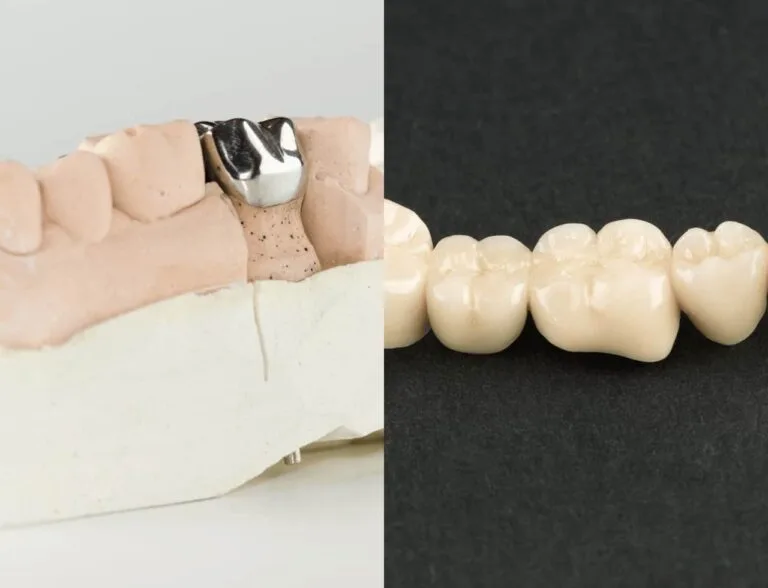
When a tooth is lost, three replacement options exist: a dental implant, a conventional bridge, or a removable denture.
← Swipe to see full table
| Feature | Implant | Fixed Bridge | Denture |
|---|---|---|---|
| Bone Preservation | Yes — prevents resorption | No — bone still resorbs | No — accelerates resorption |
| Adjacent Teeth Ground Down | No — standalone | Yes — 2 adjacent teeth | No |
| Chewing Force Restored | 80–90% of natural | 60–70% of natural | 20–30% of natural |
| Longevity | Fixture: lifetime | 10–15 years average | 5–10 years before replacement |
| Removable | No — fixed like natural tooth | No — fixed | Yes — required for cleaning |
| Initial Cost | ₹25,000–₹55,000 | ₹12,000–₹60,000 | ₹3,000–₹20,000 |
Book Your Free Implant Consultation
3D scan assessment, treatment plan, and written cost — at no charge. 0% EMI available. Open 7 days across Bachupally & Gachibowli.
Dental Implants Hyderabad — FAQs
The most common questions patients ask about dental implants — clinical and cost — at Smilebook Dental Hyderabad, answered by Dr. Anurag Ellanki.
What is the success rate of dental implants in Hyderabad? Published dental literature documents 10-year implant survival rates of 95–98% when placed by qualified specialists in assessed patients. Risk factors — smoking, uncontrolled diabetes, poor hygiene — reduce this. At Smilebook Dental, a thorough pre-surgical assessment including 3D CBCT scanning identifies and manages risk factors before placement.
How much does a dental implant cost in Hyderabad? A single tooth implant costs ₹25,000–₹55,000, including the fixture, abutment, and ceramic crown. Same-day implants start from ₹30,000. All-on-4 starts from ₹2,50,000 per jaw. Bone grafting, where required, is quoted separately from ₹8,000 after CBCT assessment. 0% EMI is available. All costs are confirmed in writing before treatment begins.
What is included in the dental implant price? The price includes all three components: the titanium implant fixture, the abutment, and the ceramic crown, plus follow-up appointments within the standard healing period. Bone grafting and CBCT scan costs are quoted separately where required — always confirmed in writing before treatment begins.
What are the benefits of dental implants over dentures? Implants prevent jaw bone loss (dentures accelerate it), restore 80–90% of chewing force (dentures restore 20–30%), require no adhesive, do not shift while eating or speaking, and last a lifetime in the fixture (dentures need replacement every 5–10 years).
How long do dental implants last? The titanium fixture, once osseointegrated, typically lasts 20–25 years or more. The ceramic crown may need replacement after 10–15 years due to normal wear. At Smilebook Dental, all implants are placed personally by Dr. Anurag Ellanki — not delegated to junior staff.
Is dental implant treatment painful? Placement is performed under local anaesthesia — patients feel pressure but no pain. Mild soreness for 3–5 days afterward is normal and managed with prescribed medication. Same-day implants follow the same protocol under local anaesthesia.
Am I suitable for dental implants? Most adults in good general health are suitable. Suitability depends on sufficient bone volume, healthy gums, and no uncontrolled systemic conditions. A free CBCT-based consultation confirms suitability definitively.
Is EMI available for dental implants? Yes — 0% EMI for single implants, All-on-4, All-on-6, and full mouth reconstruction, with tenures of 3, 6, 9, and 12 months. Set up directly at the clinic — no separate bank application. Requires Aadhaar, PAN, and a credit/debit card from a participating bank.
Is Smilebook Dental open on Sundays? Yes. Bachupally is open Mon–Sat 9AM–1:30PM & 3:30–9PM and Sun 10AM–7PM. Smiles by Sneha, Gachibowli, is open all 7 days, 11AM–8:30PM. Implant consultations including CBCT scan are available at both.
Explore Specific Implant Options
This page covers the full picture — how implants work, what they cost, and who they’re right for. If you already know roughly what you need, these guides go deeper on each specific option.
If you’re missing several teeth in a row, you may not need an implant at every gap — an implant-supported bridge, covered in our Mallampet & Bachupally implants guide, uses just two implants to anchor a fixed replacement for three or more teeth.
Patients who can’t manage a gap between extraction and a fixed tooth often ask about same-day dental implants in Hyderabad — where a temporary crown is placed the same day as surgery, in patients confirmed suitable by CBCT scan.
If you’ve lost most or all of your teeth in an arch, All-on-4 dental implants in Hyderabad replace a full arch on just four implants, often without the need for bone grafting.
And if Gachibowli, HITEC City, or Kondapur is more convenient than Bachupally, the same specialist and the same implant procedures — including free CBCT-based consultations — are available at Smilebook Dental’s Gachibowli clinic.
Smilebook Dental — Implant Locations in Hyderabad
Opp Ramdev Jewellers, Mallampet Road, beside Union Bank · Mon–Sat 9AM–1:30PM & 3:30–9PM · Sun 10AM–7PM
Beside Radisson Hotel, opposite Q Mart · 7 days · 11AM–8:30PM
Complete Implant Treatment Pages
Immediate-load implants — leave with a tooth the same day.
Full-arch implant restoration — the permanent alternative to dentures.
Implant treatment serving Mallampet, Pragathi Nagar & Nizampet.
Implant treatment at Smiles by Sneha, Gachibowli.
When bone grafting is needed — types, procedure, and healing.
Comprehensive combined implant and restorative treatment.
CAD/CAM fabricated restorations from Smilebook’s in-house lab.
Complete treatment pricing across all Smilebook Dental services.