Vertical Tooth Fracture Treatment in Hyderabad

Smilebook Dental Hyderabad — Same-week fracture assessments. Open 7 days.
✍️ Dr. Anurag Ellanki, B.D.S, M.D.S · 📅 Updated August 2026 · ⏱ 6 min read
A vertical tooth fracture is one of the most time-sensitive decisions in dentistry — here's how to recognise it, how it's diagnosed, and when the tooth can genuinely be saved.
The Short Answer
Can a vertical tooth fracture be saved?
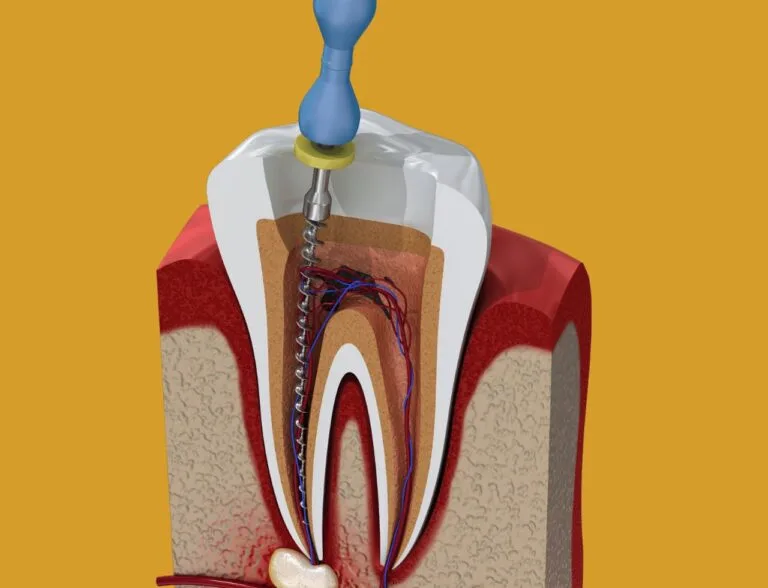
Yes — if caught before the crack extends below the gum line or into the root. We typically treat a restorable fracture with root canal treatment, a fiber post and core build-up, and a zirconia or ceramic crown. Once the fracture reaches bone level or splits the root, the tooth is no longer salvageable and we recommend extraction with dental implant replacement instead. Smilebook Dental uses clinical exam, digital X-ray, and CBCT (where needed) to give an honest prognosis before recommending treatment. Contact: +91 95159 61060.
Vertical Tooth Fracture — Can the Tooth Be Saved?
A cracked tooth is one of the most deceptive dental problems. Unlike a cavity or a broken cusp, a vertical tooth fracture can be invisible to the naked eye yet silently compromise the entire structure of the tooth. At Smilebook Dental, we see patients every week who have been living with discomfort for months — not realising a vertical fracture was the root cause.
A vertical fracture that extends from the incisal third toward the coronal third of the crown is particularly concerning. Without timely intervention, the crack can propagate deeper into the root, dramatically reducing the chances of saving the tooth. Understanding the warning signs and acting quickly makes all the difference.
What Are the Warning Signs?
What are the warning signs of a vertical tooth fracture?
Sharp pain on biting down or releasing pressure, lingering sensitivity to hot or cold, a visible crack line on the tooth surface, and food lodgement or discomfort while chewing. Pain that comes and goes specifically with biting is one of the most characteristic signs and should not be ignored.
Dentists often misdiagnose vertical tooth fractures because the symptoms mimic other dental conditions. Watch out for these classic signs:
Sharp Biting Pain
Pain when biting down or specifically when releasing pressure.
Lingering Sensitivity
Sensitivity to hot or cold that doesn't fade quickly.
Visible Crack Line
A line on the tooth surface visible to you or your dentist.
Food Lodgement
Discomfort or food catching in one spot while chewing.
If you notice any combination of these symptoms — particularly pain that comes and goes with biting — do not wait. If you leave a vertical fracture untreated, it will almost always worsen over time. See our emergency dental care page if you're in pain right now.
How Is a Vertical Fracture Diagnosed?
How is a vertical tooth fracture diagnosed?
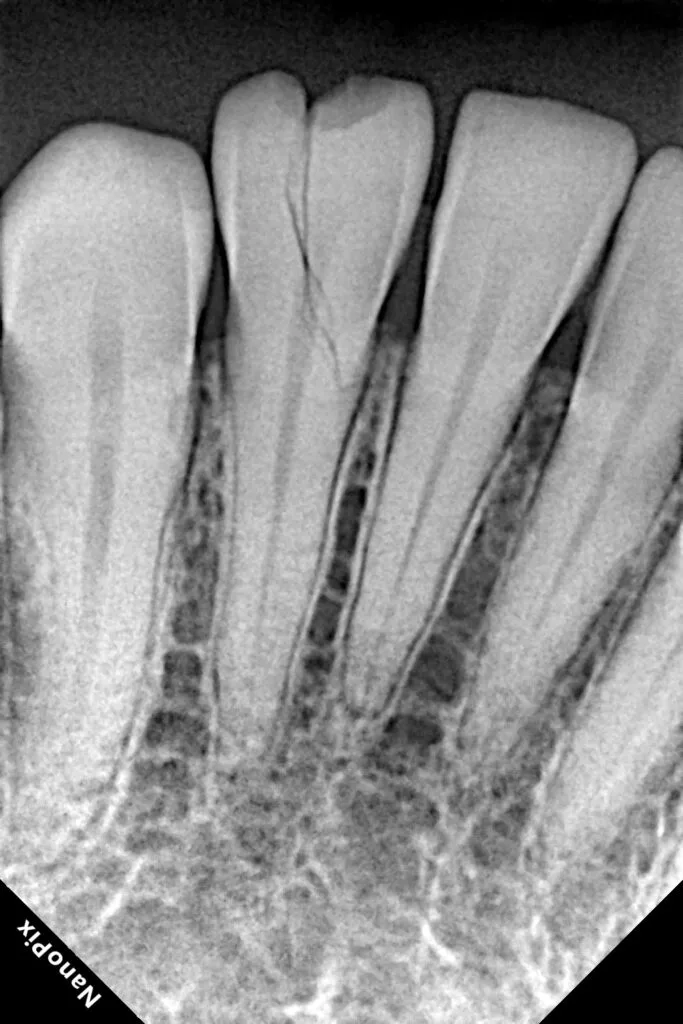
Diagnosis starts with a clinical exam — probing, bite tests, and transillumination to locate the fracture line — followed by a digital X-ray to assess bone levels and root involvement. In selected cases, we use a CBCT scan for 3D imaging, since many fractures stay invisible on a standard X-ray.
Because fractures don't always appear on a standard X-ray, our team at Smilebook Dental uses a staged diagnostic approach to precisely evaluate the extent of the crack before recommending any treatment.
Clinical Examination
Probing, bite tests, and transillumination to locate the fracture line and identify which tooth the fracture affects.
Digital X-ray
Assesses bone levels and root involvement, though many fractures remain invisible at this stage.
CBCT Scan (Selected Cases)
3D imaging to detect fractures that don't show up on a conventional X-ray.
This thorough diagnostic process ensures that we never recommend extraction prematurely — and equally, that we never attempt to restore a tooth with a poor prognosis.
Treatment Options: What Comes Next?
How is it decided between root canal treatment and extraction?
The decision depends on how deep the fracture extends and whether it has affected the pulp. If the crack stays above the bone level, root canal treatment followed by a crown can usually save the tooth. If the fracture extends below bone level or splits the root, the tooth cannot support a restoration long-term and extraction followed by an implant is the more predictable option.
The right treatment depends entirely on how deep the fracture has extended and whether it has affected the pulp (nerve). Here is how we approach it:
✅ If the Tooth Is Restorable
❌ If the Fracture Is Too Deep
The key message: Early intervention dramatically improves the chances of preserving your natural tooth. The same fracture that is restorable today may require extraction in three months if you ignore it.
Why Prompt Treatment Matters
What happens if a cracked tooth is left untreated?
An untreated vertical fracture almost always worsens over time. The crack propagates deeper into the root, increasing the risk of infection reaching the bone and surrounding gum tissue. A tooth that is restorable today may require extraction within a few months if you allow the crack to progress unchecked.
Saving the Natural Tooth Comes First
Natural teeth are irreplaceable in the truest sense. No implant, however excellent, fully replicates the proprioception — the feel and feedback — of a real tooth. At Smilebook Dental, our first priority is always to save your natural tooth whenever the prognosis justifies it. When extraction is unavoidable, we make the transition to a dental implant as smooth and comfortable as possible.
Precision Diagnosis, Honest Recommendations
Our specialists use advanced diagnostic technology, including digital X-rays and CBCT scanning, to give you a precise, honest assessment of your tooth's condition — and a personalised treatment plan that prioritises your long-term oral health. See our full dental treatment price list for related procedures.
Concerned About a Cracked Tooth?
Book a fracture assessment at Smilebook Dental — Bachupally & Gachibowli, Hyderabad. Same-week appointments available.
Vertical Tooth Fracture — FAQs
Below are the questions patients ask most often about cracked and fractured teeth — answered clearly by Dr. Anurag Ellanki.
Can a vertical tooth fracture be saved? Yes, in many cases — if the fracture is caught early and has not extended below the gum line or split the root. The tooth can usually be saved with root canal treatment, a fiber post and core build-up, and a full-coverage crown. If the crack has progressed into the root or below bone level, the tooth is generally not restorable and we recommend extraction with implant replacement instead.
How is it decided between root canal treatment and extraction? The decision depends on how deep the fracture extends and whether it has affected the pulp. If the crack stays above the bone level, root canal treatment followed by a crown can usually save the tooth. If the fracture extends below bone level or splits the root, extraction followed by an implant is the more predictable option.
What happens if a cracked tooth is left untreated? An untreated vertical fracture almost always worsens over time. The crack propagates deeper into the root, increasing the risk of infection reaching the bone and surrounding gum tissue. A tooth that is restorable today may require extraction within a few months if you allow the crack to progress unchecked.
American Association of EndodontistsIs Smilebook Dental open on Sundays for fracture assessments? Yes. Smilebook Dental Bachupally (Mallampet Road) is open every Sunday from 10 AM to 7 PM, and Monday–Saturday from 9 AM to 1:30 PM and 3:30 PM to 9 PM. Smiles by Sneha, Gachibowli is open all 7 days of the week from 11 AM to 8:30 PM.
Smilebook Dental — Locations in Hyderabad
Smilebook Dental clinic locations in Hyderabad: (1) Smilebook Dental, Bachupally — Opp. Ramdev Jewellers, Mallampet Road, beside Union Bank, Bachupally, Telangana 500090; open Mon–Sat 9 AM–1:30 PM & 3:30–9 PM, Sun 10 AM–7 PM; phone 095159 61060. (2) Smiles by Sneha, Gachibowli — 1st Floor, Gachibowli–Miyapur Road, beside Radisson Hotel, opposite Q Mart, Anjaiah Nagar, Gachibowli 500032; open all 7 days, 11 AM–8:30 PM; phone 079816 65236.
Location details — Smilebook Dental HyderabadOpp. Ramdev Jewellers, Mallampet Road, beside Union Bank · Mon–Sat 9AM–1:30PM & 3:30–9PM · Sun 10AM–7PM · 📞 095159 61060
Smiles by Sneha, 1st Floor, beside Radisson Hotel, opp. Q Mart · Open daily 11AM–8:30PM · 📞 079816 65236
Related Articles & Services
Painless RCT by Dr. Anurag Ellanki.
Painless extractions when a tooth can't be saved.
Full guide to implant options and what to expect.
Fixed teeth in a single visit, where eligible.
Full-coverage crowns for restored, cracked teeth.
Rebuilding bone before implant placement.
Same-day care for acute tooth pain or trauma.
Transparent pricing for every treatment we offer.